What Does a New Puppy Need? A Complete Checklist for Pawrents
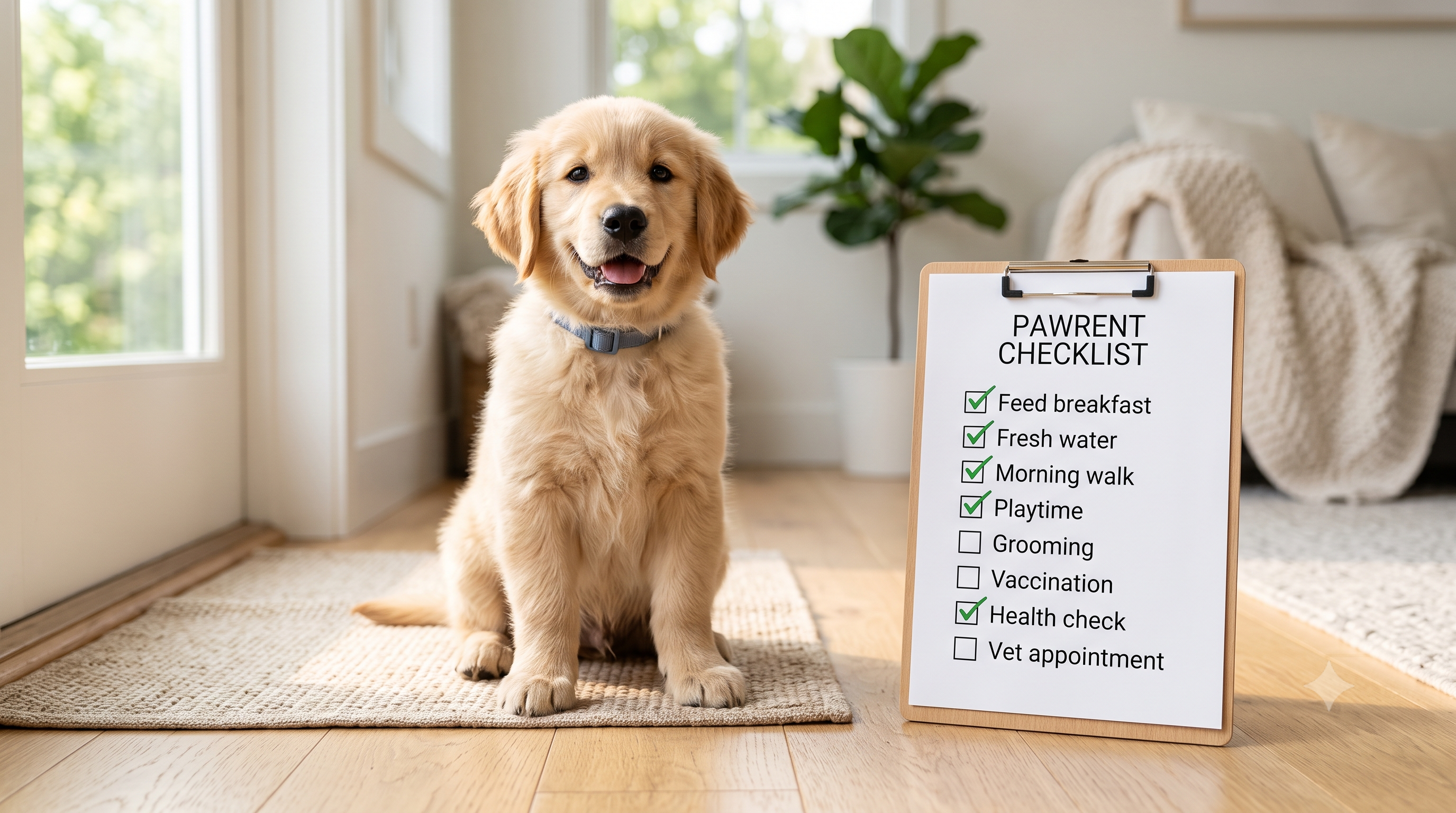
Bringing a puppy home for the first time often feels like a mix of joy and panic.
Joy because you finally have an anabul. Panic because there's suddenly so much to sort out: what to feed it, where the crate goes, when to see the vet, whether it can be bathed yet, and what to do if it cries all through the first night.
This guide sums up everything a new puppy needs in its first days — from the basic gear to the health schedule — so you can focus on enjoying the moment instead of stressing about feeling unprepared.
Note: this guide is general information only. Every puppy is different, and a veterinarian is the only one who can give recommendations suited to your anabul's condition and breed.
Basic Gear Before Day One
Ideally, all of this is ready before the puppy arrives:
- Crate — it becomes a safe space, a bed, and a toilet-training tool. Pick a size big enough to stand and turn around in, but not too large.
- Food and water bowls — choose stainless steel or ceramic. Plastic scratches more easily and can harbor bacteria.
- A mattress or soft pad inside the crate.
- Chew toys — a teething puppy needs something to chew on. This saves your slippers and table legs.
- Collar, leash, and ID tag — even if it's not going outside yet, an ID tag matters from day one.
- Puppy-specific shampoo and a small towel.
- Wee-wee pads for indoor toilet training.
- A room divider or gate — so the puppy can't roam the whole house before toilet training is done.
You don't need to buy everything premium all at once. What matters most: a comfortable crate, clean bowls, and safe chew toys.
Puppy Food: What, How Much, When
Choose food formulated specifically for puppies — not adult dog food. A "puppy" or "all life stages" label on the packaging is a good starting guide.
Feeding frequency by age:
| Age | Feeding Frequency |
|---|---|
| Under 3 months | 4 times a day |
| 3–5 months | 3 times a day |
| 5 months and up | 2 times a day |
If you switch food brands, transition gradually over 5–7 days by mixing the old and new food little by little. A sudden change can upset a puppy's stomach.
Always make sure clean water is accessible at any time.
Puppy Vaccine Schedule
Vaccination is one of the most important things in the first months. Before the vaccine schedule is complete, a puppy should not go out to interact with other dogs or public areas.
A common schedule recommended by veterinarians in Indonesia:
| Age | Vaccine |
|---|---|
| 6–8 weeks | First combination (Distemper, Hepatitis, Parvovirus) |
| 7–9 weeks | DHPPi |
| 11–13 weeks | DHPPi booster + Rabies + Leptospirosis |
| 15–17 weeks | Rabies booster + Leptospirosis |
| Every year | Annual booster |
In Indonesia specifically, the Leptospirosis vaccine is strongly advised given the high number of leptospira cases in a tropical environment. Discuss the schedule that best fits your puppy's breed and age with your veterinarian.
The full guide is here: Dog Vaccines: Schedule and Types.
Sleeping Spot and Sleep Patterns
Puppies sleep a lot — around 18–20 hours a day. This is normal and important for their development.
Place the crate in a quiet corner, away from children's play areas and noise, but still within sight. During the first few nights, put the crate near your bed — the sound of your breathing and your presence help the puppy feel less alone.
Don't be surprised if it cries on the first or second night. This usually stops after a few days as it gets used to its new surroundings.
The First Grooming: When and How
A puppy should not be bathed before 8 weeks of age. Before that, clean it with a warm, damp cloth if needed.
After 8 weeks, use a puppy-specific shampoo with warm water, and make sure it's fully dried after the bath — especially around the ears and skin folds. Puppies are more prone to getting cold than adult dogs.
A common bathing frequency: every 3–4 weeks, or less often for short-haired breeds. Beyond bathing, get the puppy used to a brush from an early age — this makes grooming easier later and keeps routine grooming sessions more comfortable for both of you.
Toilet Training
This is probably the biggest challenge in the first month, but also the most important one to get done early.
The basic principles:
- Take the puppy to its toilet area (wee-wee pad or yard) right after waking up, after eating, and after playing.
- Give a positive response every time it succeeds in the right spot.
- Don't punish accidents — clean up calmly and carry on with the routine.
Consistent toilet training usually takes a few weeks up to two months, depending on the breed and the individual puppy. The main key: consistency from everyone in the household who helps out.
The First Vet Visit
Schedule a vet visit within the first few days after the puppy arrives home. This first visit usually covers:
- An initial physical exam
- Starting the vaccination schedule
- The first deworming
- Nutrition guidance suited to breed and age
- Microchipping (optional but recommended)
Vet consultation fees in Indonesia generally range from Rp 95.000–Rp 150.000 per visit, not including vaccines and medication. Budget for regular visits throughout the first year.
See the full dog care guide: Dog Care Guide.
How Anabulku Helps
With so many schedules to remember in the first year — vaccines, deworming, grooming, routine visits — it's understandable that some slip through. Not from a lack of care, but because everything is scattered across your memory, chats, and photo gallery.
Anabulku can help pawrents keep track of these things:
- Vaccine and deworming reminders — set once, get reminded right on the day
- Weight tracker — log the puppy's weight regularly to monitor its development
- Health timeline — vet visits and health conditions kept neatly in one place
- Family sharing — if other family members help care for the puppy, everyone sees the same schedule
- Digital health card — ready to show the vet whenever it's needed
Start by registering your puppy's profile, adding the first vaccine schedule, and let Anabulku remind you of the rest.
First-Month Checklist
- Crate, mattress, bowls, and toys ready before day one
- Age-appropriate puppy food available
- Vet visit scheduled within the first 1–3 days
- Vaccine schedule set up with the veterinarian
- Toilet training area decided
- Everyone in the household knows the puppy's basic routine
- Vaccine schedule and weight logged in one place
Important note: This article is a general guide and not a substitute for veterinary advice. For your puppy's specific condition, breed, and needs, always consult a trusted veterinarian.
Download Anabulku free on the App Store and start recording your anabul's journey from day one.
FAQ
When can a puppy go outside?
Generally after the first vaccination series is complete, around 14–16 weeks of age. Always confirm with your veterinarian, since the schedule can differ depending on the vaccines used and local environmental conditions.
How much does it cost to care for a puppy in the first month?
A rough estimate in Indonesia: basic gear (Rp 300.000–Rp 1.000.000), the first vaccine series (Rp 200.000–Rp 500.000 per visit), food (Rp 100.000–Rp 400.000/month depending on brand and dog size), and vet fees. The figures vary by city and clinic.
How long does toilet training usually take?
On average 4–8 weeks with consistent practice. Some puppies are faster, others need more time. Consistency from everyone in the household is the key.
A new puppy often cries at night — is that normal?
Very normal. In the first days, a puppy is adjusting to a new environment and missing the company of its mother and littermates. It usually eases on its own after a few days.
Can Anabulku be used for dogs?
Yes — Anabulku supports both cat and dog profiles. All the reminder, weight tracker, health timeline, and family sharing features are available for both.
Tim editorial Anabulku yang menulis tips dan kabar perawatan kucing dan anjing untuk pawrents di Indonesia.