Why Is My Cat Not Eating and Lethargic? 8 Causes to Watch For
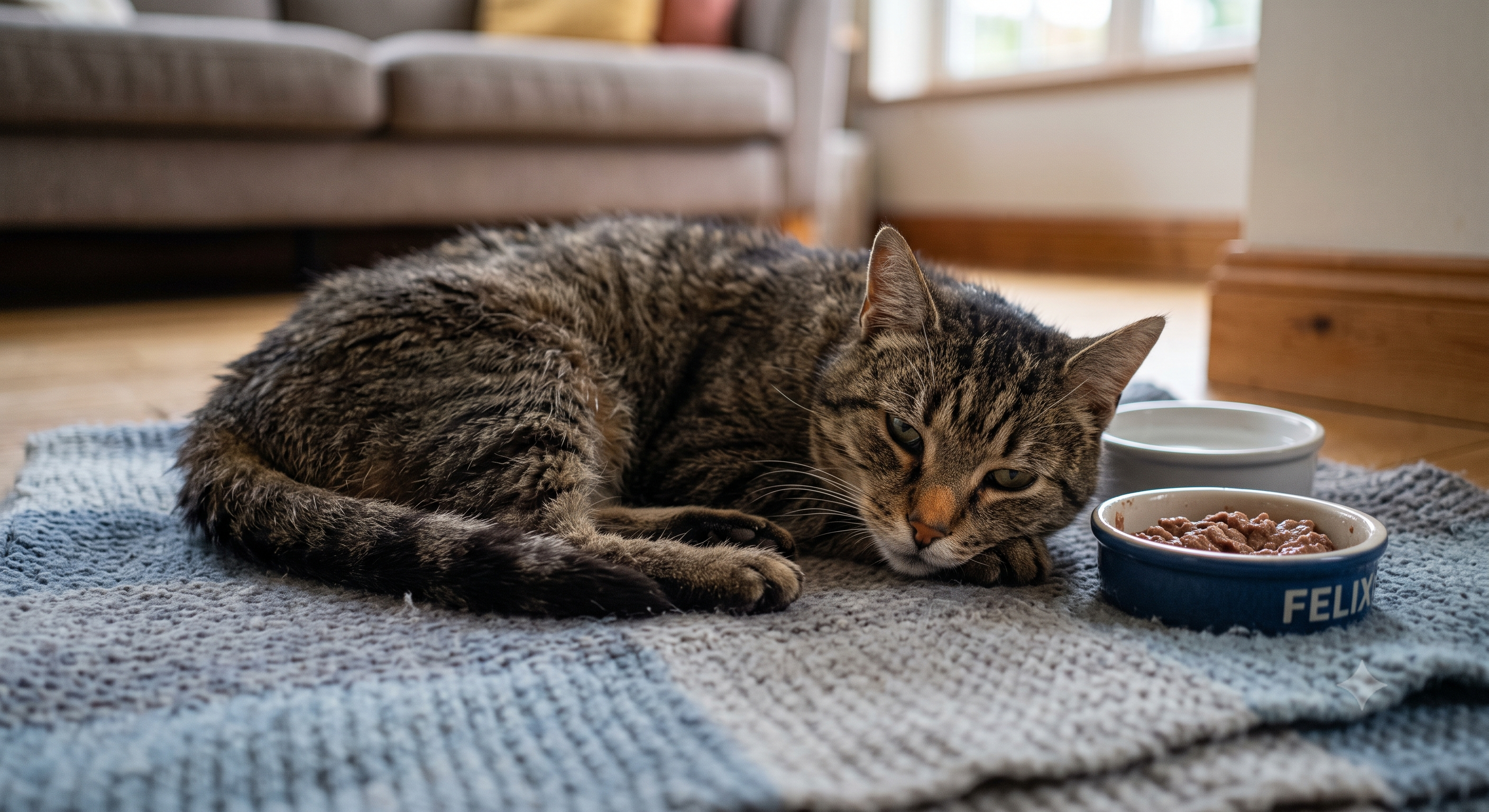
Milo usually comes running the moment you open the food container. But today he's just lying in the corner, not reacting, and his bowl is still full.
One symptom on its own — not eating, or just being quiet — can still be within the range of normal now and then. But when both appear together, that's usually a signal worth paying closer attention to.
Important note: This article is general information only, not a substitute for veterinary diagnosis. Every cat is different, and only a veterinarian can assess your anabul's individual condition. If your cat hasn't eaten for more than 24 hours and is also lethargic, contact a vet today.
Why This Combination Is More Serious Than "Just Not Hungry"
A cat that simply won't eat — maybe because you switched foods, or they're being picky — can usually be monitored for a short period.
But when lethargy comes along with it, it often means your anabul's body may be working hard to fight something off. Lower energy is a way the body redirects resources toward recovery — and a cat that is both refusing food and listless needs veterinary attention sooner rather than later.
There's also a risk that many pawrents don't know about: a cat that stops eating for more than 24–48 hours is at risk for hepatic lipidosis (fatty liver disease) — a condition where the liver begins processing body fat excessively because there's no food energy coming in. This is a serious condition that needs veterinary care, not something to wait out for days.
8 Reasons Your Cat May Not Be Eating and Is Lethargic
1. Stress or Environmental Change
Cats are highly sensitive to change. Moving to a new home, a new family member (human or animal), rearranged furniture, or even a change in your own schedule can make a cat feel unsettled — and that can tank their appetite.
Stress in cats usually comes with other signs: hiding more, avoiding contact, or using the litter box more frequently than usual.
2. Dental or Mouth Pain
A sore tooth, swollen gums, a mouth ulcer, or a stuck foreign object can make eating painful. Because eating hurts, your cat avoids the bowl entirely — not because they aren't hungry, but because eating is uncomfortable.
This is sometimes called pseudo-anorexia: the appetite is there, but a physical barrier prevents eating.
3. Nausea, Digestive Trouble, or a Food Change
A nauseous cat won't eat, and this can be triggered by many things: switching food brands or textures too quickly, spoiled food, intestinal parasites, or conditions like gastritis.
If you changed Milo's food in the past few days, that's a useful clue to start with.
4. Infection and Fever
Infections — both bacterial and viral — often cause fever, and fever almost always kills a cat's appetite while making them lethargic. This is a normal immune response, but it still needs attention.
Common feline infections like cat flu, upper respiratory infections, or urinary tract infections can all show up this way.
5. Kidney or Liver Disease
Chronic conditions like chronic kidney disease (CKD) or liver problems often start showing up in subtle ways: a cat that's gradually more tired, drinking more water, and slowly losing interest in food.
Because the changes are gradual, many pawrents only realize something is wrong after the condition has progressed. This is exactly where records of weight trends and behavior changes over time become valuable.
6. Pain Anywhere in the Body
A cat in pain — whether from an unseen injury, joint pain (arthritis), or an internal condition — tends to go quiet, move less, and stop eating. They can't tell you where it hurts, so the only signals that appear are these behavioral shifts.
7. Post-Vaccine or Medication Reaction
After a vaccination or certain medications, some cats experience mild lethargy and reduced appetite for 24–48 hours — this is usually normal and part of the immune response.
But if this continues beyond two days, or is accompanied by other concerning symptoms, it's still worth checking in with your vet.
8. Serious Illness (FIP, Anemia, Tumors)
More serious conditions like FIP (Feline Infectious Peritonitis), anemia, or internal tumors can also present with the combination of lethargy and appetite loss. These usually come with additional signs — a distended abdomen, significant weight loss, or pale gum color.
When to Go to the Vet Right Away
Don't wait if your anabul shows any of the following:
| Sign | Urgency |
|---|---|
| Not eating for more than 24 hours + lethargic | Contact a vet today |
| Repeated vomiting or diarrhea | Go to the clinic promptly |
| Pale, white, or bluish gums | Emergency — go to the clinic now |
| Labored breathing or heavy panting | Emergency |
| Unable to urinate (especially in male cats) | Emergency |
| Extremely weak, unable to stand | Emergency |
| Significant weight loss in a short time | Contact a vet today |
The practical rule: if you're unsure, call the clinic and ask. Vets would rather you call too early than wait too long.
What to Track Before You Go to the Vet
When you arrive at the clinic, a vet will ask a lot of questions: when did your anabul last eat normally, what was their weight last month, what medications have they taken, when was their last vaccine.
If all of that is recorded in one place, you can answer quickly — and the vet can focus on examining your cat rather than collecting basic information.
With Anabulku, you can:
- Review weight trends — has the appetite loss been building for weeks, or did it just start? A weight chart gives your vet the context they need.
- Pull up the vaccine and medication history — when was the last vaccine? Was any new medication given in the past few days?
- Show records from previous visits — prior diagnoses, medications given, and vet notes — all laid out in a single timeline per anabul.
- Log what you're observing right now — last time they ate, how lethargic they seem, whether there's vomiting — so you don't forget important details when you're stressed.
These records don't replace a physical exam — but they can make your vet visit far more effective and give your vet a much fuller picture.
Checklist: What to Observe and Note
Before heading to the vet, write down:
- When did your anabul last eat normally?
- Has anything in their food changed recently?
- How long have they seemed lethargic?
- Any vomiting, diarrhea, or difficulty urinating?
- Any environmental changes recently (moving, new animal, guests)?
- Recently vaccinated or given any medication?
- What was their weight the last time you checked?
- What color are their gums? (light pink is normal, pale is concerning)
- Are they still drinking water?
Early Detection Starts with Good Records
Many serious conditions in cats — kidney disease, liver problems, recurring infections — are easier to manage when caught early. And early detection often starts with a simple observation: you notice Milo has been slightly quieter than usual for the past three weeks, and his weight is down 200g from last month.
That kind of small change is only visible if someone has been tracking it.
You don't need to become a veterinarian to take good care of your anabul. But having solid records — weight, behavior, vet visits, medication history — makes you more prepared, and keeps your anabul better protected.
Download Anabulku free on the App Store and start logging Milo's health history in one minute — so when something changes, you'll notice it sooner.
Related Articles
- Signs of a Healthy Cat You Can Check at Home
- Guide to Caring for Cats
- Cat Vaccine Schedule: When and What
FAQ
How long can a cat go without eating before I should worry? If your cat isn't eating but is still active and has no other symptoms, you can observe them for up to 24 hours. But if appetite loss comes with lethargy, don't wait — contact a vet. Cats that don't eat for more than 24–48 hours are at risk of hepatic lipidosis (fatty liver disease), which is a serious condition.
What can I give a cat that won't eat? Don't give any medications or supplements without veterinary guidance. What you can try at home: offer wet food with a stronger smell, make sure the bowl is clean, and try a more comfortable room temperature. If they still won't eat after a few hours, consult your vet.
Is a lethargic cat that won't eat always serious? Not always — sometimes it's a temporary response to stress or a normal post-vaccine effect. But when both symptoms appear together, they always warrant closer monitoring, since the combination can signal infection, organ disease, or a condition that needs treatment.
How do I know if my cat has a fever? A cat's normal body temperature is around 38–39.2°C. Measuring it requires a rectal thermometer — usually easier to do at the clinic. Signs you can observe at home: ears and paw pads feel warmer than usual, the cat is shivering, or they're hiding in warm spots.
Can Anabulku help when my cat is sick? Anabulku is not a diagnostic app. But health records stored in Anabulku — weight, vaccine history, prior vet visits — can help you provide more complete and accurate information to your vet during a check-up. That speeds up the process and makes the exam more effective.
My cat just switched food and stopped eating — is that normal? A sudden food change can cause cats to refuse to eat. Ideally, transition food gradually — mix old and new food over 7–10 days. If your cat still won't eat after 24 hours, or the refusal comes with lethargy or vomiting, consult your vet.
Tim editorial Anabulku yang menulis tips dan kabar perawatan kucing dan anjing untuk pawrents di Indonesia.